A Conversation with Joyce
From the Editor-in-Chief of Our Diary Magazine herself, Joyce shares her thoughts on cultural appropriation, whiteness, the Chinese immigrant experience, and offers an analysis of her feature piece, Not Quite Snow.
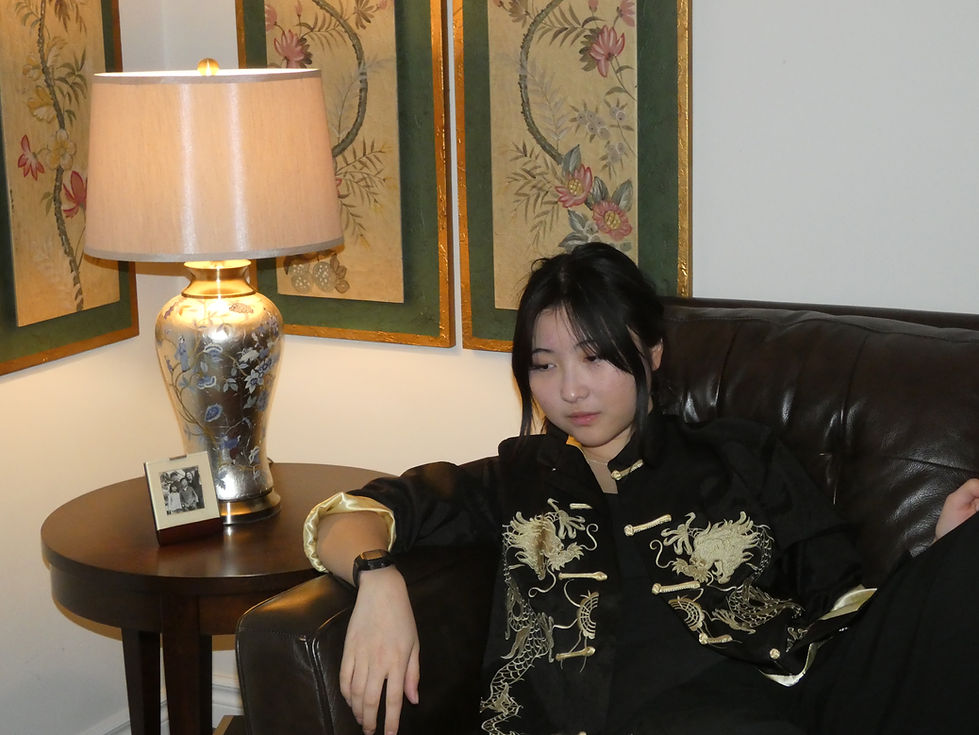
Blending traditionally feminine and masculine elements of Chinese dress, Joyce shared a piece of herself with striking vulnerability and honesty. It's always nice catching up with a friend.
Talent: Joyce Gan
Interview & Photography: Kai Oszlai

K: Talk to me about what you’re wearing!
J: Well, it’s called hanfu (汉服). (see #1) People don’t really wear it these days — it’s more of an ancient Chinese [dress], which is what they wore in the Shang Dynasty. The modern iteration is called qipao (旗袍). (see #2) I don’t know if you’ve seen that one before — it has this mandarin collar.
K: Yeah, it’s the tighter one, right?
J: Yeah. It wasn’t tight to begin with. People [have] hypersexualised it.
K: Oh yes, I’ve seen people put these crazy slits in it.
J: And they go, like, all the way up to the ass.
K: Okay, so traditionally, where’s the slit on the qipao supposed to go?
J: If there is one, it’s only supposed to go up to here [gestures to knee]. It’s supposed to be more modest, because… you know, Confucian [values] back then were big on women’s chastity. The male iteration is kind of different.
K: Oh, men wear qipaos, too?
J: Yep, it’s the other outfit I’ll be wearing after this. But it’s pretty much always looked the way it has been because people don’t sexualise men [like they do women].
(1: Hanfu (汉服), meaning "Han Chinese clothing," refers to the traditional flowing robes worn by the Han people for thousands of years.)
(2: Qipao (旗袍) is widely regarded as a modern Chinese dress for women, with a tight-fitting silhouette and a high neckline. It was popularised during the early 20th century in Republican-era China. The male equivalent of the garment is called the changshan (长衫/長衫)).
_JPG.jpg)
[both stepping into a river]
J: Oh, shit — where’s my phone? I think I dropped it.
K: Did you drop it?
J: Yeah [retrieves phone from water].
K: Does it still work?
J: Yeah… although we might be in the wrong place.
K: Well… for content, amiright?
J: Yeah [laughs].
K: What about the colour of your hanfu? Is it significant at all?
J: Nah. I was actually gonna talk about this. It’s like, overly commercialised. You know how China is romanticised, right?
K: In what way?
J: Like, now people are always at ‘a very Chinese time in their life.’ And there’s people who go to China specifically to do photoshoots in traditional clothing. So this outfit isn’t even something I think they would’ve worn back then. It’s modernised. The traditional colours would be, like, red or gold — but if you wore gold and weren’t related to the emperor, you’d be beheaded.
K: [laughs] What?! But people wear gold and red now, no?
J: Yes, now they do because the emperor is no longer in power. The traditional saying that they used to pass on is now taken in a different light. For example, there’s this one saying that nowadays goes ‘good luck on your studies,’ but back then there was this test that everybody in the country had to take, with the top three scorers being able to serve as high officials to the Emperor.
K: What kind of test was it?
J: Academic proficiency, or something like that. So then, the names of the people who succeeded would be broadcasted on this big golden plaque, and that’s why this saying, directly translated in Chinese, is ‘let’s hope we see your name on the big golden plaque.’ (see #3)
(3: Referring to the saying “jīn bǎng tí míng” (金榜題名), translating to "having one's name listed on the gold honor roll". It historically refers to passing the imperial examination and getting a top rank. Today, it is used to wish someone success in examinations or high-level job achievements.)

K: Do you know what the pieces of the outfit are called, specifically?
J: I don’t really know what the separate components are called. Except for the skirt, which is called mamianqun (马面裙). I don’t know what the fuck that means.
K: [laughs] I was about to ask what it meant.
J: It’s, like, horse… something… dress. (see #4)
K: Interesting.
(4: "Mamianqun" (马面裙), meaning “horse-face skirt,” features two overlapping flat panels in the front and back, with pleated sections on both sides.)
K: Could you stand in front of the green thing? [pointing to a tree]
J: [laughs] The green thing.
K: Shakespeare is not dead. Oh — do you think Shakespeare is a concept?
J: What do you mean?
K: It’s like when people say ‘critical thinking is dead.’ Do you think the way in which Shakepeare was innovative could become a pop culture reference or concept people refer to things as?
J: I don’t know… I feel like it’s pretty modern because he was a funny fuck. Also, his stuff is, like, chock full of innuendos.
K: That’s true.
J: That guy had a dirty, dirty mind. I actually think it’s kind of inspiring, because it shows that the times [haven’t] changed. It reminds me of the Roman graffiti that was uncovered on this relic with things like ‘[Name] was here.’
K: Yeah, it was on some Egyptian pyramids or something. (see #5)
(5: “I visited and I did not like anything but the sarcophagus!” is just one of many etchings left in the Tomb of Ramesses V & VI in the Valley of the Kings. This tomb has been open since antiquity, with ancient tourists leaving their marks sometimes in Latin, most often in Greek.)


K: Is there anything going on in China you think people should be aware of?
J: I wouldn’t say in China, but rather the way China is seen in Western culture. Do you remember what it was like being a Chinese person in 2020?
K: No, because I’m not Chinese. [Joyce laughs] You’re talking about COVID-19, right?
J: Yeah. Like, that was when being Chinese was a ‘bad thing,’ you know. Somebody said this once to me: ‘oh, the Chinese people eat anything with arms and legs, except for tables and chairs.’ You know what I said? ‘Sorry.’
K: …what were you saying ‘sorry’ for?
J: What was I apologising for?! On behalf of everyone in China?! It’s not like I was there! I think that’s a theme that you see a lot these days, especially in immigrant [households]. It seems like everyone I know [that come from immigrant parents] feels like they need to prove that they ‘belong’ here [in Canada], you know? There are things that obviously get carried over from our parents that are like…
K: Being apologetic?
J: Not apologetic, but always striving to prove that you’re ‘worth it.’
K: Do you still feel that pressure now?
J: I don’t feel a pressure of belonging culturally in Canada, because I feel like I am more white than I am Chinese. Like, yes I celebrate Lunar New Year and Mid Autumn Festival — but English is my first language. My mother and I… we dream in different languages. That was a realisation I had recently, because she was telling me about dreaming of back home, and I dream in English. But yeah, I think that sort of ‘apologeticness’ passes onto first and second-gen immigrants through overachieving.
K: Yeah, like trying to compensate for something.
J: Especially with us Asian kids. That’s where the stereotypes come from: ‘you’re good at math,’ ‘go into engineering.’ I don’t know.
K: No basket-weaving courses. (see #6)
J: Oh my godddd! I’m so pissed! The fuck you mean ‘basket-weaving’?!
(6: Referring to current Ontario Premier Doug Ford's Progressive Conservative government's cutting of OSAP grants from 85 per cent to 25 per cent. He encouraged pursuing degrees in trades, healthcare and STEM-related fields as those that would provide jobs to graduates, saying “you’re picking basket-weaving courses, and there’s not too many baskets being sold out there" while speaking to reporters at Queen's Park on February 17th, 2026. This has sparked outrage among students, particularly those living in low-income families.)

K: You said you feel ‘more white than you do Chinese.’ Apart from the dreams, why else do you feel this way? Are there other things influencing this perception you have of yourself?
J: There’s this concept called the acculturation gap — a phenomenon that happens with children in immigrant families. The children adapt to the host culture faster or more cohesively than the adults do; adults maintain their mother tongue, traditional values, and beliefs. The youth will, as a result, become more assimilated; in this case, [with] white culture. It’s like me speaking Mandarin.
K: You’re more comfortable in English, I assume?
J: Much more comfortable. I speak French better than I speak Mandarin. How crazy is that?
K: Insane. Kids are like sponges, right? They just soak everything up.
J: Yeah. There’s this thing called ‘GABA,’ which is a neurotransmitter in the brain that works better in children, [allowing] them to absorb information and languages more quickly. (see #7) It’s like me: I was born here, but the first two years of my life were spent in China. I grew up speaking Chinese, but then after I moved back here, I was able to pick up on the language right away. However, the way I talk about things now makes it easy to tell that I’m, like, distinctly different culturally from [third]-generation Canadians, while not being necessarily ethnically ‘pure.’ My legal name doesn’t include my Chinese name — it’s just Joyce Gan. That’s also another part I feel strongly about: legally, I’m Canadian. There’s no name trying me back to China. Whatever they call me in China is not, like, real in a way. You know?
(7. Gamma-aminobutyric acid (GABA) is a neurotransmitter in your central nervous system, acting as a calming agent. It contibutes to improved focus, emotional regulation, and reducing hyperactivity, primarily in children.)


J: I think part of the confidence of white people comes from a lack of a need to prove themselves. My mom told me ‘you shouldn’t go into Med because you won’t make it,’ telling me to choose the ‘safer path.’ My family wouldn’t tolerate me going into Humanities. I used to want to be a writer when I was young.
K: I know.
J: But then, somewhere along the way, I convinced myself that I want to do something in healthcare.
K: And is that really you convincing yourself, or is it maybe the outside pressures telling you to think that?
J: I don’t know — I have a prominent interest in all things health; it genuinely does interest me. I feel that if I went into a career in the humanities, I wouldn’t feel as fulfilled since those paths are hobbies for me. I’d rather not taint the things I enjoy doing. I would rather go into scientific research — developing interesting ways to help with our healthcare systems… because I almost died in ours. There are inherent flaws that would be great to change.
K: In what ways do you feel that you’re getting in touch with your Chinese side?
J: I think all of it is through forced exposure from my mother. This brings me back to what I said at the beginning about people being at ‘a very Chinese time in their lives.’ No, you’re not. Just because you’re molding Chinese culture into something that’s ‘good for the media,’ you’re not encapsulating the immigrant experience that shapes so many Chinese peoples’ lives. It’s hard to [capture] these feelings when you’re just viewing things as superficial. People are making dumpling lasagna during ‘very Chinese points in their lives.’
J: The substance of ‘Chineseness’ is primarily based on family — like the Confucian belief of filial piety, for instance. (see #8) Obviously, modern China has moved away from Confucianism, but still maintains a lot of inherent values. For example, they used to not allow people to cut their hair because it was seen as a gift from one’s parents; cutting it meant severing the ties you had to your family. But now, no one cares, right? Even still, you’re expected to put family above everything, even yourself. Abiding by these traditions is a must. For Lunar New Year in China, schools get two weeks off, which is their ‘winter break.’ They care about the new years that much. Students study 12 or more hours each day to take this single test dictating their entire futures, and they still get those two weeks off.
K: I like how you guys have so many superstitions, especially surrounding the new year.
J: Yeah! Another one is that you have to eat fish — because the word ‘fish’ in Chinese is a homonym for ‘having to spare.’ However, you’re not allowed to flip the fish. You know how one side has bones while the other side has meat?
K: Yep.
J: You have to remove the skeleton. It’s bad luck, or something, if you don’t. (see #9) But yeah! All these superstitions are meant to grant good luck in the new year. People who are at ‘a very Chinese time in their lives’ cannot understand that, right? They’ll never experience it. I can’t stand when people say stuff like that.
(8. Filial piety ("xiao") is a core Confucian virtue emphasisng deep respect and care for one's family.)
(9. Eating fish during Lunar New Year symbolises abundance and wealth for the coming year. "Yú'"(鱼), the Chinese word for "fish," is pronounced the same as the word for "surplus." The phrase used in this context is "Niánnián yǒuyú" (年年有鱼), meaning "may you have abundance every year".

K: What’s the deal with people saying ‘a very Chinese time in my life’? I don’t recall that being commonly said aside from recently on social media.
J: It really does just go back to romanticisation. Now, people are realising that we have pretty clothes, makeup, cheap goods on Temu and AliExpress, good food… so they’ve started saying it.
K: Do you think, then, that globalisation isn’t as good as people say it is?
J: Okay, I think that because of the social media age, people are taking things to the next level. I don’t think globalisation, necessarily, is a bad thing, because it allows exposure to different cultures. It’s just that the internet tends to get obsessed over small, pretty things. This reduces the cultural value of these aspects.
K: Like matcha.
J: Oh my gosh, yeah.
K: These things are like trends. People tend to get obsessed with these new, exotic trinkets, and then abandon them after 3 weeks.
J: Exactly. In those circumstances, you’d just be appropriating [the culture].


K: You’re talking a lot about how people are appropriating Chinese culture on social media — but what about current real life? What are you seeing, hearing, or maybe experiencing yourself?
J: The judgement hasn’t passed in real life. You’re still expected to be good at math.
K: That’s true. Some things are just baked into our culture as Canadians, I guess.
J: Chinese immigrants, I feel, are more willing to abandon their morals for a little bit of gold.
K: Interesting. Do you think that ideology is something that gets passed down each generation?
J: Yeah. I think a lot of immigrant children are dead-set on pursuing money over happiness. The mindset is that ‘money can buy you happiness, and whoever says it can’t clearly didn’t have enough money.’
K: Real.
J: Compared to more money-driven people, I obviously still am considering my own happiness.
K: Do you think this tug-of-war between your passions and the expectations people have of you is representative of the ‘whiter’ side of you, in a way?
J: Yeah! It’s this kind of duel between my double-consciousness — where one side is telling me ‘money before happiness’ and the other’s like ‘don’t you want to be happy?’
K: Are you listening to the angel or the devil?
J: I think the devil is winning. [both laughing] Yeah, the devil ultimately dictates what I do.
J: I think Asian parents see their children as extensions of themselves. They want their children to carry on whatever legacy they have and do the things they failed to accomplish. But I think that’s the reason they forget we are our own people. Growing up in this Western culture means we will not have the same values as what our parents are used to back home. A lot of Chinese parents want their kids to go into Med because they think ‘it’s easy to do in China, why not here, too?’

K: What was this particular assignment for?
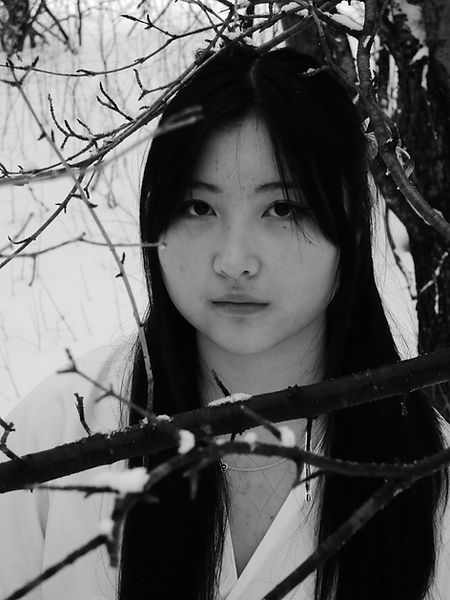
J: English. We read God of Small Things by Arundhati Roy, then had to choose an image and write in her style about a time in our lives related to isolation.
K: Shit... that's deep!


"It was a sweetbitter night when I got to know the Four of Them. It was not the first time I had met the Mother who loves him Just The Way He Is. The father who is Still There. The sister who makes swans and turtles and wontons. It was not the first time I had seen their matching smiles or sicksweet comfort with each other, but it was the first time I had felt it twist my stomach like the wringing of water from a plaid handtowel. Taut. The kind that stings your hands when you grip it too tight. Because you grip it too tight. The kind that sticks to your fingertips with the inside-of-sink smell. That fishsmelling notfresh holding-too-tight smell. "
Annotations
1. In her writing style, Arundhati Roy makes up words, like "skyblue carsounds." In this instance, the night is more sweet than bitter, so the original word, "bittersweet," becomes flipped.
2. "Mother" is capitalised, whereas "father" and "sister" are not. The mother is the important person here.
3. The piece starts off in a nonsensical way, then slowly unfolds to allow the reader to put the puzzle together. Later on, these objects become the shapes of the dumplings they'll make.
4. The plaid handtowel is one of the many extended metaphors in this piece. The wringing of water represents uncomfort; a stomach twisting. If you've ever smelled a kitchen towel, there is a characteristic "kitchen smell" that sticks to the material. In this instance, it is representative of Chinese culture: the smell sticks to your fingertips, therefore making it something you can never rid yourself of. It's there, faint but lingering. "Taut" refers to my mother. She is very tense and upright; a very immigrant mother.

"I had always found the kitchen Too Empty. Too cluttered. Too Clean. In that emptyclutteredclean kitchen, Mama wiped her hands on the plaid handtowel. They are veiny and weathered hands, as if the varicose veins from her left leg had somehow spread to them over time like fireworks. Pop pop pop. The hands you would expect from a forty year-old Chinese woman with her feelings kept neatly sealed under Tupperware lids."
Annotations
1. We flash into the past, now. "Empty" and "Clean" are capitalised, but "cluttered" is not. Empty and cluttered are opposites, right? So, this doesn't make sense. This represents a disjoint in perception: is it clean or cluttered? Right now, it is more empty than cluttered, in the physical sense. Looking at the photo I used for this piece, I was wondering, "why is the right side so cluttered but the left side so empty?" "Too Clean" refers to my mother. Her obsession with cleanliness is something that sticks with her. The plaid handtowel metaphor gets used again.
2. We establish the plaid handtowel metaphor again, representative of Chinese culture. She wipes her hardworking and weathered hands on the towel; a reminder of who she is.
3. My mother conceals her feelings.


"You have to roll the dough out into neat circles,” Mama instructed, voice quieter than the itching of my multicolored tights (for Modesty) and silky qipao (for China). I fidgeted with the lunchbag-texture of my flour-coated Tinkerbell apron. Blonde-hair-green-eyes-green-dress. Felt the flaky skin on my eczema-riddled palms catch onto Modesty and China like a grudge. I pretended the flour was pixie dust instead. Glittering. Sunbeaten. Sandcolored.
“Get me the rolling pin. Are you even listening, Xiao Qi? Look at the mess you’ve made.” Mama’s eyebrows scrunched as she forcefully patted my apron down, falling pixie dust turning back to flour on the peach-tiled floor. Snowlike.
Mama made a small gesture at the rolling pin. I held my breath as I leaned over the sink to pick it up. Fishsmelling notfresh holding-too-tight."
Annotations
1. The multicoloured tights represent the Confucian principle of modesty. The qipao represents tradition.
2. This juxtaposition of culture versus foreignness is significant. In the photograph, the apron looks like the silhouette of a qipao.
3. The qipao material is made with silk, and my eczema is rough. Because of this, the flakes on my palms catch onto the fibers. Subconsciously, I am clinging onto the culture; even still, begrudgingly. I don't want to, but I am obligated. At the end of the day, I fall back into the habit of clinging.
4. The whole point of this piece is my unwillingness to accept my Chinese identity, because I felt it was "enforced" when I was a kid. I'm more fascinated by the "white world." I pretend the flour on my apron is pixie dust (white world). When my mother pats my apron down, the magic is gone; the pixie dust turns back into flour (Chinese world) on the floor. In my adulthood, I try to reject this reality by going to the beach and getting tan. In Chinese culture, whiteness is a sign of purity, but I choose to tan because I want to reject this standard. However, when I am actually faced with genuine whitewashedness of Chinese culture, I get uncomfortable. "Glittering. Sunbeaten. Sandcolored" is repeated throughout the piece. It is representative of whitewashedness; the "American Dream". Being pulled out of this fantasy from the patting of my apron makes me see the flour as "snowlike"; a reminder of the Chinese beauty standard.

"“Do you want to see how Mama folds the dumplings?” I gave her a stately nod, attention now drawn toward her veiny firework hands smartly tucking a dollop of pork-chive-onion-egg filling into the white wrapper. She worked quickly, making a neat, crimped Dumpling dumpling with uniform creases along its back. When she placed it onto the baking sheet, it was plump, stark white, and stood up on its own, like a stiff Chinese girl with chapped palms and a silky qipao. The whiter the skin, Mama would say, the better quality it is. Hand-rolled, authentically-risen dough.
“Can I make a meatpie instead?” I reached for the near-perfect doughcircles.
“No!” She quickly batted my hand away.
A trained response.
Regret slowly filled her face as my eyes began to water. Not because it hurt. Tears never fell and I swallowed them back.
A trained response.
She quickly corrected herself. “Because meatpies will need two skins, and we can’t waste any.”
“Okay,” I steadied my voice. “Can I make a star, then? I’ll only use one skin, I promise.”
Anger flashed momentarily in her eyes again, but she didn’t let it burst this time. “No. It’s not proper. Do it the way I told you to.”
It was always in times like these where her voice started to adopt that Tone that I always thought sounded like November rain. Cold. Berating. Not quite snow. The Tone that I would, later in life, hear in the emptyclutteredclean Volkswagen with varicose-vein-hands gripping the steering wheel like a grudge. Too tight. Fingertips with the inside-of-sink smell.
Pop pop pop.
I tried my best to copy Mama’s actions. The perfect amount of filling. Quick, limber fingers making neat, uniform creases. But my dollop was too big. My stubby, four-year-old fingers didn’t have the strength to pinch the dough shut. When I finished, it didn’t stand up like Mama’s. Pink pork filling leaked out like unsuccessfully held-back tears, but Mama wasn’t mad this time because I had tried.
“Don’t worry, they all look a little funny the first time.”
Years later, I still had never made a dumpling quite as Dumplinglike as Mama. Some are better than others. Most times I put too little filling. A lesson learned from four-year-old Xiao Qi who made it overflow. The one saving grace about my dumplings is that they learned to stand up on their own. They had a sharp, sickle-like curve to them. Like a spine holding up a girl. Pale, fishsmelling, holding-too-tight."
Annotations
1. This directly addresses the "snowlike" metaphor from above.
2. This idea of authenticity and its impact on whitewashedness in Chinese immigrant culture is highly inspired off of true experience. When I am with Richard's family, they are always so tight-knit. When I went to their house to make dumplings, once, they used these store-bought, perfectly circle machine-cut skins. All you had to do was put the filling inside. You didn't have to do what I did: knead the dough myself, let is rise for a couple hours, cut it up, smash it, and roll out the circles myself. After all this, then we'd put the filling in. This is what I consider authentic. This juxtaposition is a repeating symbol throughout this piece.
3. A meatpie would require two skins, which is something my mom would consider wasteful.
4. This is another prominent metaphor. At this point in time during the year, when the temperature should create snow, it isn't; the rain that falls is cold and miserable. This is representative of where I am culturally. Snow would mean that I am purely Chinese. The rain confirms that I am not there yet. I am almost Chinese; I am in this in-between state of what I am.
5. Fingertips holding onto Chinese culture.
6. I try my best to copy the Chinese culture, but I can't. I put too much effort.
7. This is a direct contrast from my four-year-old self. I now put less effort into trying to be more "Chinese".
8. Now, I can make my own decisions. However, I am pale; I am Chinese. It is something I can't let go of.


"Mama had thought of the name Mingqi long before the Blue Scrub Nurses had whisked away the birth certificate with the name Joyce hastily scribbled under First Name. She regretted not being able to put it as my legal name, but soothed her mind by telling herself that no one would be able to pronounce it anyway. She could imagine the confused, sympathetic attempts her coworkers in the Ministry of Environment would make at pronouncing the name. “Mingchee? Mingkee? No, I got it. Mickey!”
Still, she kept the name to herself. Mingqi. Blessed light.
She, and everyone around her, would continue to marvel about how beautiful Mingchee/Mingkee/Mickey was. How her remarkably pale skin and monolids looked Just Like Her Mother. In the coming years, confused, sympathetic coworkers from the Ministry of Environment would wonder how Mickey came from Joyce and how the two were connected in any way at all. They would look at the paleskinned mother and the formerly-so daughter, sunbeaten and sandcolored after a long summer at the beach. A tan that would only wash away in November rain to reveal a complexion. Cold. Berating. Not quite snow."
Annotations
1. My Chinese name and its meaning.
2. Initially, I looked more "Chinese"; more like my mother. Now, by rejecting the Chinese culture through making my own decisions, I am "sunbeaten and sandcolored." By November, the rain washes this whitewashedness away; I turn back into who I really am: Chinese.

"Richard was introduced to my life through a series of coincidence-like coincidences that somehow turned him into a Boyfriend. Richard’s legal name was Richard and his Chinese name didn’t sound very Chinese either. Ruizhe was a borrowed name made from borrowed sounds and borrowed syllables. Borrowed from Richard. When the name leaves his Mother’s mouth, I can hardly hear the difference. No one would wonder how Ruizhe came from Richard, because Ruizhe is Richard. Tanskinned, jubilant, warm. Joyce is sunbeaten and sandcolored from the summer at the beach. Mingqi is paleskinned, November rain and Just Like Her Mother.
Inside Richard’s house is a warmglow. I felt it for the first time on The Night we made dumplings together. The warm a little too close. The glow a little too blinding.
In the kitchen, a foil-covered cylinder lay next to a glass bowl with pink pork filling. Richard opened the foil-cylinder to reveal a thick stack of perfect-circle, yellowish whitish dumpling skins. Machine-cut-and-rolled. Unauthentic dough. The kind that I had seen in grocery stores previously, but purposely skirted around. It was out of sheer politeness that I didn’t say anything as his family gathered around the table to make dumplings.
Warmglow. Too close. Blinding."
Annotations
1. Richard is representative of the whitewashed immigrant child that I wanted to be.
2. "Ruizhe" (rui-je) sounds a lot like "Richard" when spoken aloud. Whenever his mother says his name, I can't tell if she's saying "Ruizhe" or "Richard." Unlike Mingqi to Joyce, no one's going to ask how Ruizhe came from Richard because it's obvious. His Chineseness is borrowed from his whiteness.
3. I think of Chinese culture as pale and cold; I think of Richard as whitewashed because he doesn't fit this image. Richard's Chinese side is unified, whereas mine is broken because of this disconnect between Joyce and Mingqi.
4. His house is warm and lively, whereas my house is cold, too clean, too cluttered. The warmth is a little too hot and the glow is too blinding because I am not used to this new environment.
5. I now explain the difference between how my family made dumplings versus Richard's family. I felt quite shocked. Had my mom seen these machine-cut dumpling skins, she'd be frustrated that our dumpling-making isn't "authentic," like the hand-kneaded skins we make at home.


"I sat with them and picked up a skin. I thought of the countless New Years, Birthdays, Mid-Autumn Festivals that I spent making Dumplings. Too Empty. Too cluttered. Too Clean. Neat, crimped Dumpling dumplings. Far from perfection.
“Ma, can you pass me another skin?” His sister, already holding one, held out her hand for another. I braced myself for a sharp Don’t waste the skins!
Instead, a yellowish whitish perfect-circle was placed in her outstretched hand. I watched her quick, limber fingers move with elegant artistry, just enough filling, to create a nice, plump meatpie. I glanced nervously at their mother. For anger. For a change in expression. Nothing. As if this were normal.
Too close.
I watched as his sister made unDumplinglike dumplings. A swan. A turtle. A wonton. A flat dumpling, unable to stand on its own, with pink pork filling leaking out the sides.
“Joyce, do you want to make a fun one?”
His efforts to include me squeezed my stomach like the wringing of water from a plaid handtowel. My eczema-riddled hands caught on the fibres of my flannel. Holding me back.
Because of his insistence, I made a star.
When they boiled the unDumplinglike dumplings, you could not tell whether they had been machine-cut-and-rolled or hand-rolled, authentically risen. But one bite tasted of hot, angry fireworks. Of New Years, Birthdays and Mid-Autumn Festivals. Another tasted of borrowed sounds and borrowed syllables. Of Mothers and Fathers and Sisters.
Of pale and tanskinned fingers intertwined under the table, simultaneously Too Close and Not Touching."
Annotations
1. A direct callback to making dumplings as a child with my mother.
2. After my initial shock, I thought: "this is so free.' His sister was making swan and turtle-shaped dumplings and wontons. I was surprised she was allowed to do that, since my mother would always get mad at me if I tried to make a different shape. All dumplings, at home, needed to look uniform and had to stand up on their own. I thought this was an apt metaphor for culture. This explains why I want to be whitewashed — because it represents freedom to me.
3. So far, I've never made a perfect dumpling before. I've never used the right amount of filling, just like my uncertainty of how "white' or "Chinese" I'm supposed to be. Richard's sister knows just the right amount. If Richard is unified because of his name, his sister is unified because she knows the right amount of filling to use. In this instance, she uses this filling to create a meatpie, representing her "white" side. She has the freedom to create a meatpie; she is not controlled by the strict Chinese standards I am used to.
4. A reminder of discomfort.
5. My inner child has been granted experimentation.
6. I could taste my mother getting mad at me and my struggle to create perfect dumplings during these celebrations. Another bite tasted of what Richard represents: "Mothers and Fathers and Sisters" — representing "inauthentic Chineseness".

"On the car ride home, Mama was silent for the most part. Not angry. Not happy. Just silent. She had paused her dinnertime movie to pick me up. Her varicose-vein-hands gripped the steering wheel like a grudge. Holding-too-tight.
I told her about the machine-cut perfect-circle skins. About the swans and turtles and wontons. The meatpies and stars.
She scoffed and told me that those weren’t what Dumplings were supposed to look like. I shut my mouth and dreamt about the Four of Them. The Mother who isn’t holding-too-tight. The father who is Still There. The sister who makes swans and turtles and wontons. Richard who stays in that house with the warmglow while I return to mine.
Cold. Berating. Not quite snow."
Annotations
1. This is representative of the immigrant way of sacrificing things for your children. Small things, but inconveniences nonetheless.
2. Just like the grip on the wheel, my mother's grip on her culture is too tight.
3. My mother abides by the rules, saying the "unDumplinglike dumplings" aren't proper because they aren't uniform.
4. I dream about the freedom Richard's family has.